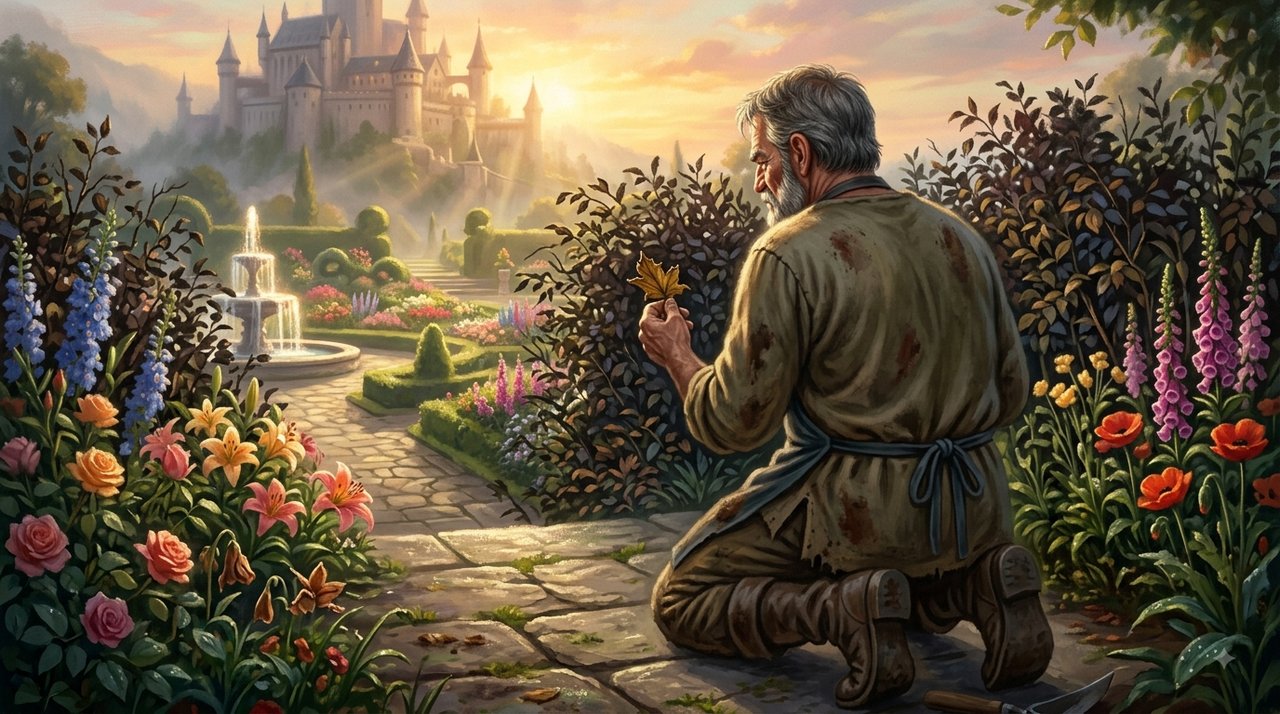
In the heart of the kingdom of Dawnlight, where the sun always stroked the rooftops with golden light and the fields yielded sweet fruit, lived the royal keeper of the gardens, Elran. Elran had a sharp eye and a rare sensitivity to every small nuance, but he also had one trait that darkened his whole world: he never managed to see the light in full, because his eyes were always drawn, compulsively, to the dark spots.
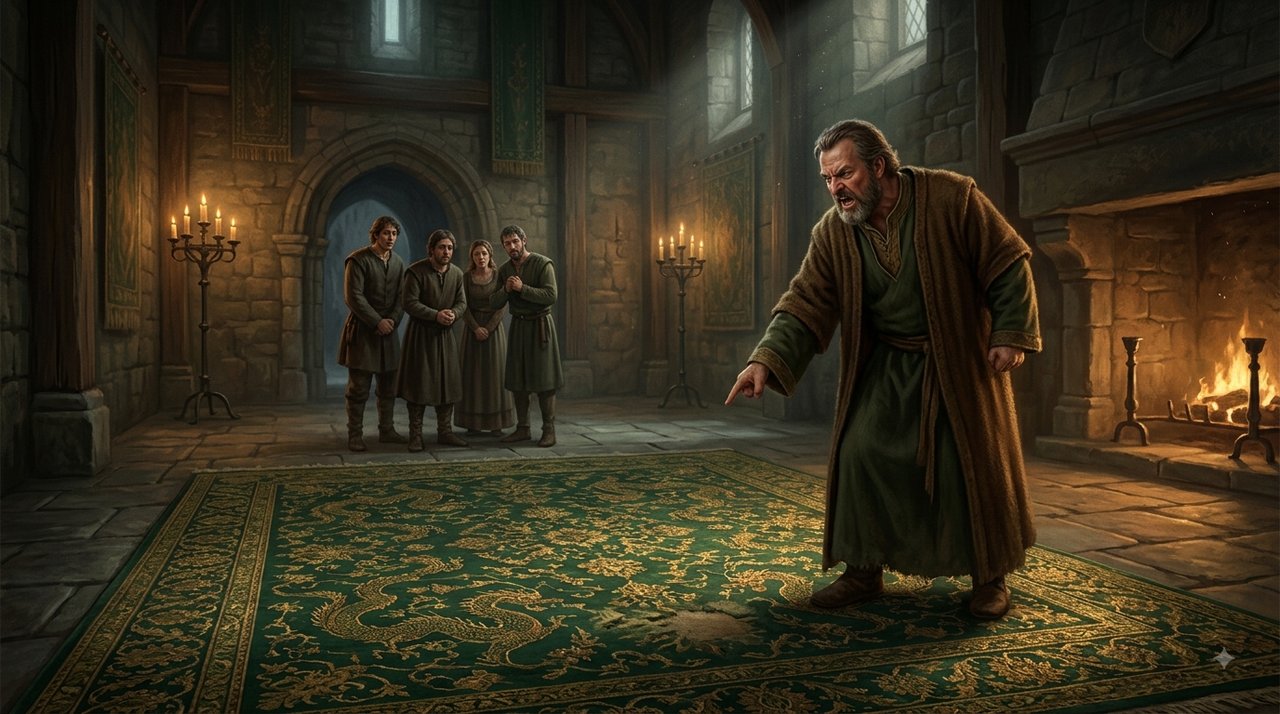
If a beautiful silk carpet was woven for him with a thousand golden threads and only one tiny faded spot, Elran would stand over the carpet, point furiously at that single spot, and cry out: "Look at this ugliness! This carpet is completely ruined, and whoever wove it did so deliberately, to hurt me!"
The Missing Spice
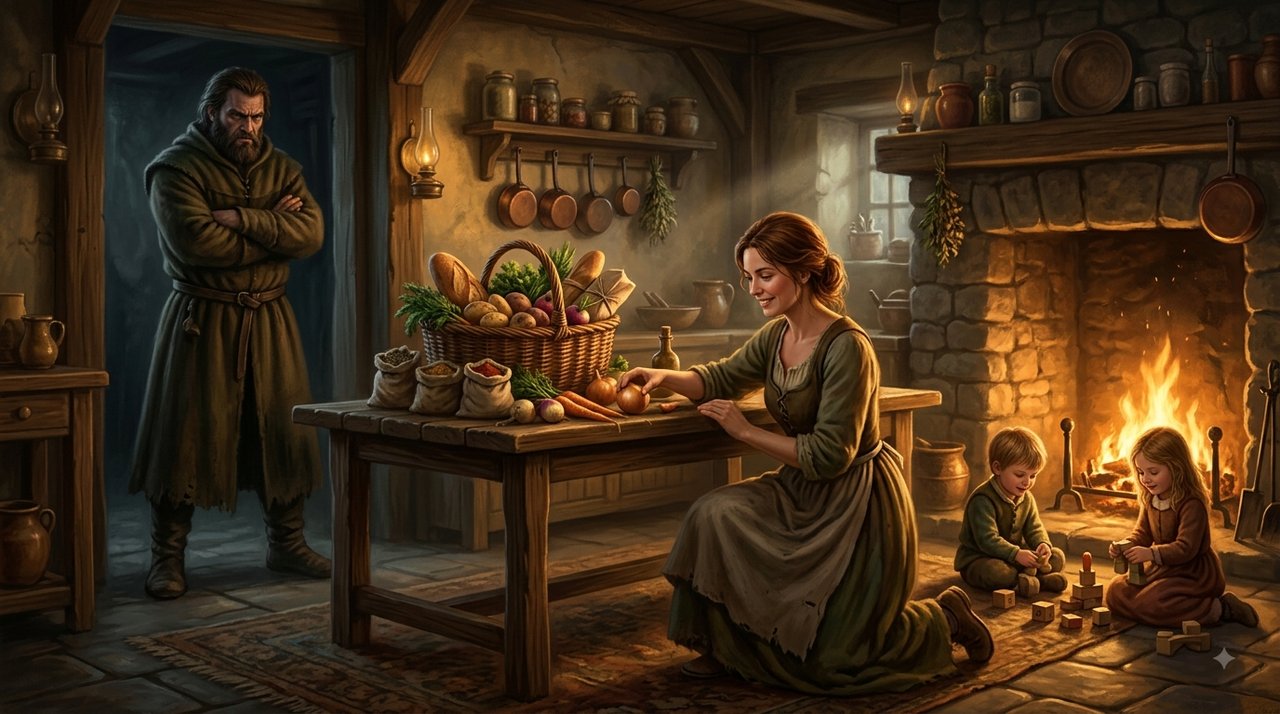
Inside his home, his devoted and loving wife had built a whole world with him. She laboured, she cooked, she raised their children and saw to his every need. But Elran did not see the decades of devotion, the warm meals or the honest care. If she came back from the market having forgotten one spice out of twenty, he did not see the full basket – he saw only the spice that was missing.
He would fling at her that she held him in contempt, that he had never mattered to her, and that all through the years she had only been looking for ways to diminish him and break his spirit.
When his family and neighbours invited him to their celebrations, Elran would scan the room like a hunter looking for prey. If someone did not greet him with a wide enough smile, if someone spoke with another person and did not turn to him at once, or if his brother travelled to a family occasion without telling him beforehand – Elran would fill with an inner burning.
He would turn every innocent gesture into a malicious plot, shun his relatives, declare that they were "enemies who destroyed his soul", and demand that everyone around him boycott them too, as proof of absolute loyalty to his pain.
As the years passed, Elran became a lonely, bitter and exhausted man. His home became a fortress where every word was weighed in fear of setting off a new storm of accusations. He was convinced that he was the most wronged and most injured man in the whole kingdom, that the entire world was weaving plots against him, and that no one understood the depth of his suffering.
The Cloth of Truth
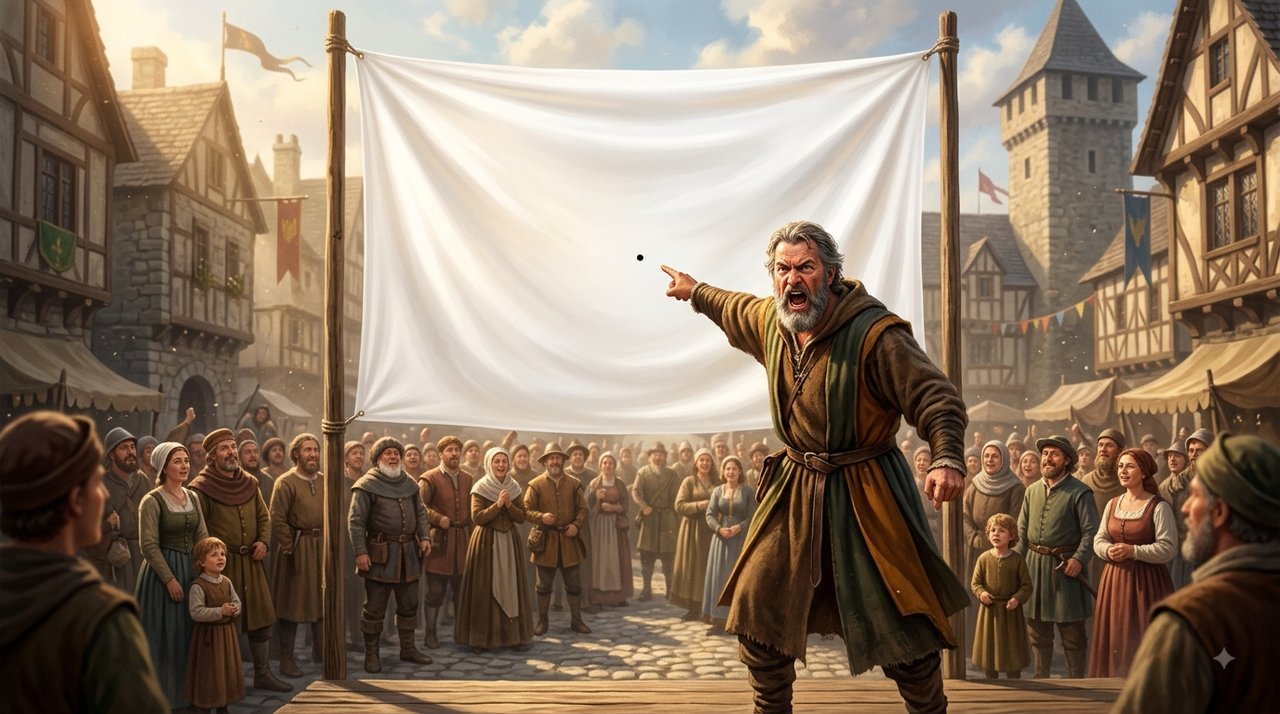
One day, an old and wise weaver came to the city carrying a cloth like no other – the "Cloth of Truth". The cloth was white, soft and magnificent, and at its centre was a small black dot of ink, the size of a sesame seed. The weaver set the cloth up in the town square and invited the people to look at it.
Elran stood before the cloth, his gaze locking at once onto the black stain, his face reddening with anger: "What a disgrace! How dare you display in the town square a cloth so stained, so ugly and so flawed? You are mocking us all!"
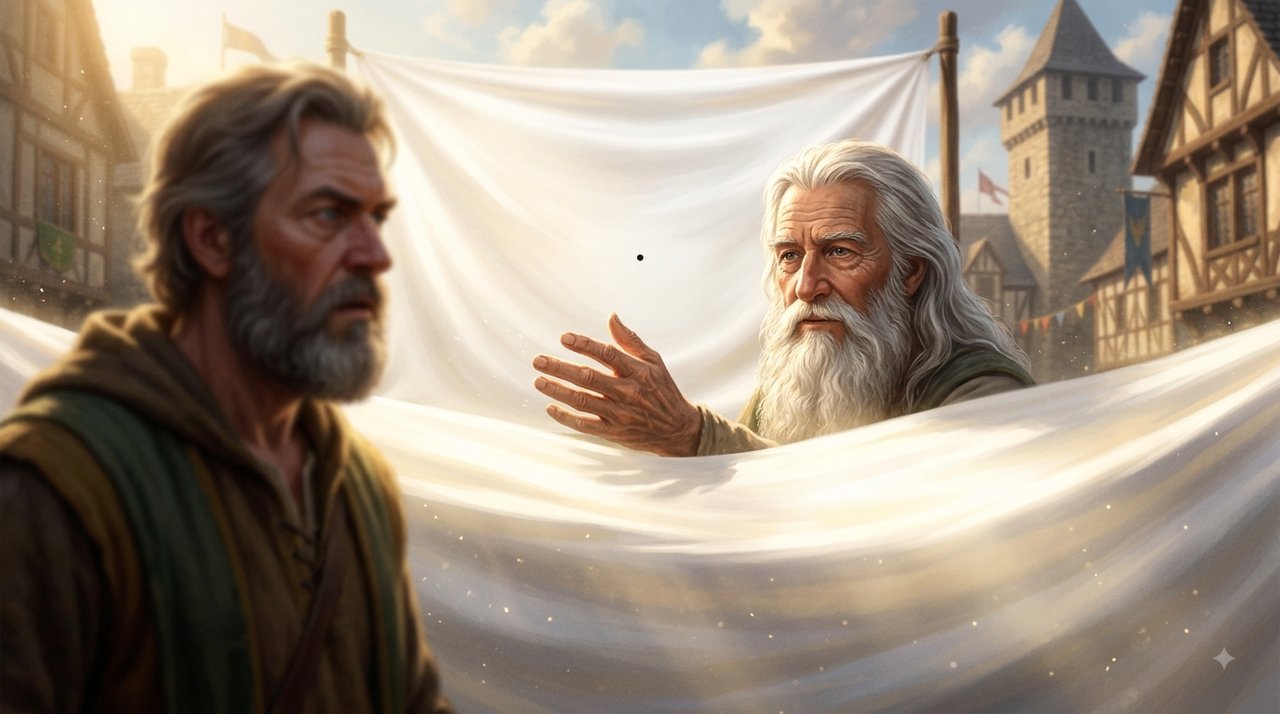
The old weaver looked at Elran with quiet, compassionate eyes, and asked him calmly: "Elran, look closely. Here is an enormous sheet of pure white silk, a thousand threads of light, months of work meant to bring warmth and beauty. Why, out of all this white and magnificent expanse, did you choose to see only the little grain of ink, and to judge the whole cloth by it?"
Elran froze where he stood, lost for words.
"You look for the flaw because inside yourself you feel flawed," the old man went on gently. "Whoever looks for a reason to be angry will always find one to burn over. Whoever looks for what is wrong will always find a dark spot. But when you focus only on the dark spots, you are blind to the sea of goodness, love and devotion surrounding you. No one is trying to destroy you, Elran. You are the one poisoning the water of your own well, casting out those who love you, and leaving yourself freezing in a darkness of your own making."
For the first time in his life, Elran felt the wall of anger and blame begin to crack. He moved his gaze away from the black stain and looked at the endless white expanse of the cloth.
When he returned home that evening, he saw his wife sitting exhausted, his children waiting anxiously, and the many years of love that had waited for him beyond every storm of rage. He understood that the choice – to see the light or to chase the shadows – had always rested in his hands alone.
When a person chooses to focus only on what is missing, on the flaws and on the dark spots, he makes himself the eternal victim of a reality he has painted black himself. Whoever looks for enemies in every corner and drives away those who love him over every imagined slight will find himself, in the end, alone on the field – not because the world turned its back on him, but because he refused to see the goodness and the love that were held out to him.